
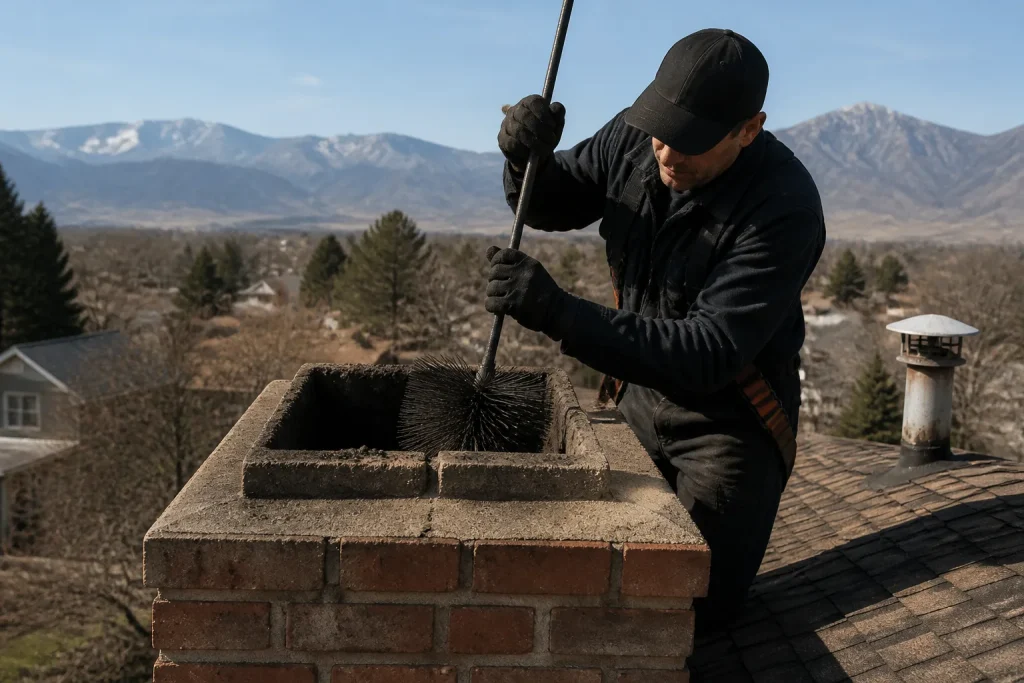
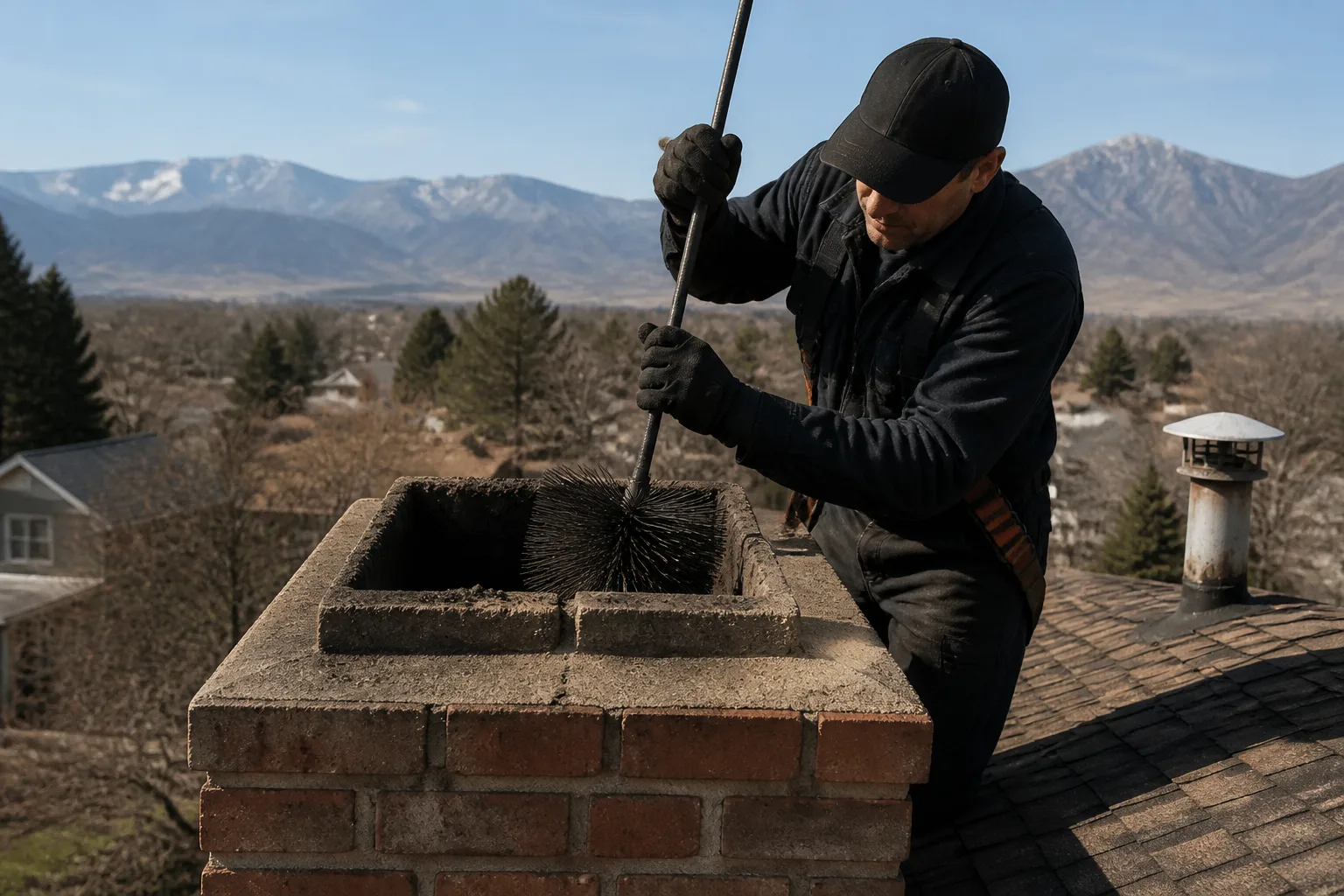
Top Signs You Need Chimney Cleaning Service – Don’t Ignore These
A strong campfire smell in your living room in July, when no fire has been lit for months, is not a quirk of your home’s character. It’s Stage 2 creosote off-gassing through the flue, and it means the chimney needed cleaning well before spring. Most Murray homeowners wait for visible smoke before they think about the chimney. By then, the problem has usually been building for a season or more. Below are the signs worth acting on, sorted into what’s overdue and what’s urgent.
The short answer: any of these signals means your chimney is telling you something. Some mean book a chimney sweep soon. A few mean don’t light another fire until someone qualified inspects the system. If you’d rather not sort it out alone, call (855) 616-0935. We answer 24/7, and we send a technician with fast dispatch from 7am to 7pm.
Which signs mean “book a cleaning” and which mean “stop lighting fires”
The distinction matters more than most people realize. Some signs are evidence that creosote has built up to a level where a sweep will fix it. Others are evidence that the system has a defect, a blockage, or a glaze of creosote that a brush alone won’t touch. In Murray, we sort the calls into two groups so homeowners know whether they’re looking at routine maintenance or something that should wait for a professional.
Signs a cleaning is overdue (book a sweep soon):
- A dull, lingering smoke smell in the room even when the fireplace is cold.
- Soot falling onto the firebox floor or the hearth.
- A black, flaky coating visible on the damper or the upper firebox walls.
- Smoke rolling into the room when you first light a fire, then settling once the flue warms.
- Strong campfire odor on warm, humid days – the classic Stage 2 creosote signal.
Signs to stop and call before lighting another fire:
- Smoke backing into the room throughout the burn, not just at startup.
- A strong chemical or tar-like smell that doesn’t fade.
- Visible glazed, shiny creosote on the flue walls (that’s Stage 3, and it’s a fire risk).
- Any sign of water staining or white chalky residue on the exterior chase.
- Cracks in the flue tile, mortar joints, or the firebox brick.
If you’re not sure which category you’re in, that’s the whole point of an inspection. We work on the whole system, not just the flue, so a single visit can tell you whether you need a sweep, a liner repair, or a new crown.
What the creosote stages look like (and how you can spot them without climbing on the roof)
Creosote forms in three recognizable stages, and each one looks and smells different. You don’t need to enter the firebox to catch the early ones.
- Stage 1 – soot and flaky ash. Light, dusty, and grey-black. It brushes off easily. A sweep handles this in a routine cleaning. You’ll usually notice it as fine soot on the damper or a dull haze on the firebox walls.
- Stage 2 – flaky, crusty, and tar-like. This is where the campfire smell comes from. Stage 2 creosote absorbs moisture and off-gasses, especially on warm, humid days. If your living room smells like a bonfire in July, you’re almost certainly looking at Stage 2 buildup. It brushes off but requires more work than Stage 1.
- Stage 3 – glazed and hardened. Shiny, tar-like, and baked onto the flue. Stage 3 creosote is highly combustible and a genuine chimney-fire risk. It cannot be removed with a standard brush. This is where a HeatShield resurfacing or a DuraFlex liner installation often comes into play, depending on what the inspection finds.
In our experience, most Murray homeowners catch Stage 1 on their own, miss Stage 2 until the smell shows up in the summer, and only learn about Stage 3 when a professional inspects. Catching it before Stage 3 is what saves you a liner repair down the road.
Why reduced draft in Murray’s high-altitude air is often a sign of blockage, not bad technique
At around 4,500 feet, Murray homes burn a little differently than at sea level. Thinner air means the fire draws differently, and draft is more sensitive to flue length, pressure, and blockage. A fireplace that used to start easily and now smolders for ten minutes before catching is not necessarily a technique problem. More often, it’s a draft problem – and in most cases that draft problem has a physical cause.
Common causes we diagnose in Murray homes:
- Partial flue blockage from soot or creosote buildup high in the flue.
- Animal nesting (birds, squirrels, raccoons) that built a home in the flue during spring and left behind material that now restricts airflow.
- A missing or damaged chimney cap that let debris in.
- Negative pressure from a newer furnace, exhaust fan, or bathroom fan pulling air the fireplace needs.
Here’s the important part: don’t try to “fix” bad draft by adding more wood or cracking the damper. A fire that smolders is a fire producing more creosote. If your Murray home has a fireplace that’s suddenly hard to start, book an inspection – not a bigger fire.
Animal nesting in spring and summer shows up as smoke problems the next winter
One of the most common patterns we see in Murray is a homeowner with a perfectly working fireplace in March, a smoky fireplace in November, and no obvious reason why. The gap is almost always a nest. Birds and squirrels look for warm, sheltered, vertical spaces in spring and early summer, and an open or damaged chimney flue is exactly what they’re looking for.
The signs to watch for going into fall:
- Scratching or rustling sounds from the chimney when no fire is burning.
- Twigs, leaves, or nesting material visible inside the firebox.
- A sudden drop in draft or consistent smoke backup when the season starts.
- An unpleasant odor that isn’t quite smoke and isn’t quite decay.
A chimney cap is the fix that prevents the problem in the first place. We install Famco and Gelco caps sourced from chimney industry suppliers, not hardware-store substitutes. If your Murray home is missing a cap, that’s worth addressing before nesting season, not after.
White staining on the chimney chase is a moisture signal, not a cosmetic issue
If you see white, chalky staining on the exterior of your Murray chimney, that’s called efflorescence. It’s not paint, mold, or leftover mortar. It’s mineral salt pushed to the surface by water moving through the masonry. Efflorescence means moisture has found a way into the chase, and it usually precedes spalling brick, cracked mortar, and eventually structural damage if left alone.
Common entry points we check:
- A cracked or missing crown at the top, which lets water straight into the masonry.
- Failed flashing at the roofline.
- Spalling brick or deteriorated mortar joints along the chase.
- A missing or undersized chimney cap.
Left alone, moisture damage leads to chimney repair that costs far more than crown and cap work. The white staining is essentially the chimney telling you about a leak before it becomes a rebuild. It’s the cheapest warning you’ll ever get.
How often should a Murray chimney actually be cleaned?
For a home with regular wood-burning use, the general rule is an annual inspection and a sweep whenever the inspection finds roughly a quarter inch of creosote buildup in the flue. For a gas fireplace, the interval can often be longer, but inspections still matter because gas systems have their own failure points. If you burn frequently through Murray’s winter, plan on annual service. If you burn occasionally, an inspection each fall will tell you whether a sweep is needed that year.
What we don’t recommend is skipping the inspection because the fire “seems fine.” Chimneys don’t send warning lights. The inspection is how you find Stage 2 creosote before it becomes Stage 3, and how you catch efflorescence before it becomes a rebuild.
When to call a pro
If any of the “stop and call” signs above match what you’re seeing, don’t wait it out. If the “overdue” signs match, a sweep is the answer. In both cases, one visit from a trained technician covers an inspection, a sweep if needed, and any cap, crown, or liner work the inspection calls for. We handle the sweep, the fireplace repair, the cap and crown, and the chimney repair under one roof, so nothing gets handed off.
Related services in Murray: routine chimney sweep and inspection, chimney cap and crown installation, and HeatShield liner resurfacing for Stage 3 creosote and damaged flues.
The Bottom Line
Three things to remember. First, a campfire smell in July is a signal from the chimney, not the house. Second, creosote has stages, and getting to a sweep before Stage 3 saves you the cost of a liner repair. Third, white staining on the chase is a moisture problem, and it’s cheaper to fix now than after spalling starts.
If anything on this list matches what you’re seeing, get a professional out for an inspection. We work on the whole system, not just the flue, and we’ll tell you plainly what needs doing now and what can safely wait.
If you’re in Murray and need help, Chimney Sweep Murray offers free estimates – call (855) 616-0935. We answer 24/7. Fast dispatch from 7am to 7pm, Sunday through Friday, closed Saturday.
Frequently Asked Questions
The clearest signs are a lingering campfire smell when no fire is burning, soot on the firebox floor, flaky black buildup on the damper, and smoke rolling into the room at startup. Strong odor in warm weather is the classic Stage 2 creosote signal. If you see glazed or shiny creosote, stop lighting fires and call for an inspection. Call (855) 616-0935 for an exact quote – estimates are free.
Creosote builds up in stages. Stage 2 creates odor and reduces draft. Stage 3 is glazed, highly combustible, and a real chimney-fire risk. Skipping also lets moisture damage from a failed crown or missing cap worsen until repair becomes structural. None of that is worth the risk of waiting. Call (855) 616-0935 for an exact quote – estimates are free.
Once a year for an inspection, with a sweep whenever buildup reaches roughly a quarter inch. Heavy wood burners may need it more often, occasional burners may need less. The inspection is what tells you. Call (855) 616-0935 for an exact quote – estimates are free.
Routine sweeping sounds simple, but chimney work involves heights, tight flues, and diagnosing creosote stages and structural issues that most homeowners cannot assess from the ground. Stage 3 creosote cannot be removed with a standard brush, and efflorescence on the exterior chase is impossible to diagnose from a ladder check alone. Call (855) 616-0935 for an exact quote – estimates are free.
Written by the team at Chimney Sweep Murray.
Need Chimney Cleaning Help?
Call Chimney Sweep Murray - the local pro we connect you with is licensed and insured, here with fast help in Murray.
(855) 616-0935