
Last updated November 24, 2026
 Sweep & inspection
 Caps & crowns
 Flue relining
 Masonry repair
 Gas fireplace service
Level 1 sweep and inspection to the NFPA 211 annual standard - flue, crown, cap, and flashing checked and photographed
Chimney sweep logs do not sweep chimneys. They loosen some creosote - which then falls where a brush and vacuum still have to collect it.
Chimney Sweep Maintenance Checklist for Murray Homeowners
The most skipped item on almost every homeowner’s chimney checklist is the smoke chamber, the sloped section above the firebox that collects the heaviest creosote and is nearly impossible to see without a flashlight and a mirror. Most people look up the flue, see darkness, and assume everything above the damper is fine. It rarely is. A maintenance checklist only earns its keep when it’s tied to real inspection points on a real chimney system, and that’s what this guide gives you: a walk through every component from the ash pit door to the chimney cap, what failure actually looks like at each stage, and which checks you can safely do yourself versus which need professional equipment. We’ll also cover seasonal timing for Murray homeowners, how to document condition year over year, and the red flags that mean stop using the fireplace now.
Quick Answer
A working chimney maintenance checklist for a Murray home covers eight components: firebox, damper, smoke shelf, smoke chamber, flue liner, crown, cap, and flashing. Homeowners can safely self-assess the firebox, damper operation, cap from ground level, and visible flashing from outside. The smoke chamber, flue interior, and crown condition require professional equipment like cameras and mirrors. Check before the first fall fire, again mid-season, and after the last burn of spring.
Styles & brands we work with
- Sweep & inspection
- Caps & crowns
- Flue relining
- Masonry repair
- Gas fireplace service
Table of Contents
- Why a Component Checklist Beats a Once-a-Year Sweep
- Firebox and Damper: What to Look For Inside
- The Smoke Shelf and Smoke Chamber: The Hidden Zone
- Flue Liner: The Component That Decides Fire Safety
- Crown, Cap, and Flashing: Protecting From the Top Down
- Seasonal Timing: Fall, Mid-Season, and Post-Season Checks
- How to Document Condition With Photos for Year-Over-Year Comparison
- Red Flags: Stop Using the Fireplace vs. Schedule Service
Why a Component Checklist Beats a Once-a-Year Sweep
Chimney problems rarely announce themselves as a single event. They build component by component. Creosote layers in a flue, a damper starts sticking in October, a crown hairline crack opens after a hard freeze, and three winters later you’re looking at a rebuild instead of a chimney repair job. A checklist forces you to look at each part of the system on its own terms, which is how problems get caught while they’re still small.
Murray sits in the Salt Lake Valley, and the local climate shapes what your chimney actually has to survive. Winters bring repeated freeze-thaw cycles, and freezing is the enemy of masonry. Water gets into a hairline crack in the crown or a joint in the brickwork, freezes overnight, expands, and widens that crack a little more. Come spring, the damage is visible. The same dry valley air that makes for pleasant summers also means wood can cure too fast and burn hot, and the winter inversions along the Wasatch Front mean many Murray residents burn more frequently than they would in a milder climate, which means more creosote accumulation per season than the national averages you’ll read on general home maintenance sites.
Our technicians have up to 9 years of experience working on systems like the ones in Murray’s older brick homes and newer builds alike. What that experience shows is consistent: the chimneys that reach us for major work are the ones that were only ever swept, never inspected component by component. A sweep clears the flue. An inspection reads the whole system. The checklist below is built on the second approach, and it’s the framework we use on every chimney sweep we perform in Murray.
Firebox and Damper: What to Look For Inside
The firebox and damper are the two components a homeowner can genuinely inspect with no special tools. That makes them the most useful starting point on this checklist. Spend ten minutes on them before you call anyone.
Firebox inspection points
- Masonry fireboxes: look for cracked firebrick, crumbling mortar joints, or white chalky staining on the brick faces. Chalky staining usually means moisture is moving through the masonry.
- Cast-iron or steel fireboxes: look for warping, rust-through, or a seal that has separated from the surround.
- Both: check that the fireback (the rear wall panel) hasn’t cracked or shifted. A cracked fireback exposes the brick behind it to direct heat.
Damper checks
- Open and close the damper fully. It should move without binding.
- Look for rust along the damper plate and the frame. Rust on a throat damper is common and doesn’t always mean failure, but heavy scale does.
- Check the seal: when the damper is closed, hold a flashlight in the firebox and look up from below. If you see light around the edges, the damper isn’t sealing.
- Confirm the damper stays open without help. If it drops back down, that’s a safety problem and should be addressed before the next fire.
Damper repair and firebox repair both fall under fireplace repair, and both are jobs we handle in Murray routinely. The reason this matters is that a stuck-open damper lets heated house air escape up the flue all winter, and a stuck-closed damper pushes smoke into the room. Neither is a chimney-cleaning problem. Both need repair.
The Smoke Shelf and Smoke Chamber: The Hidden Zone
The smoke shelf sits directly above the damper, and the smoke chamber is the sloped area between the smoke shelf and the flue. Together they form the one area of your chimney that collects the most creosote and is genuinely difficult to reach. This is where fires start. It’s also the section almost every homeowner checklist leaves out entirely.
Look at the geometry. The smoke chamber is wider than the flue, so smoke slows down as it passes through. Slower smoke deposits more of what it’s carrying. The corbelled masonry that gives the chamber its shape has dozens of ledges and rough surfaces. Creosote coats them all. And because the chamber sits above the damper and behind the firebox face, you cannot see into it with a quick glance up the chimney. You need a mirror angled over the smoke shelf and a strong flashlight, or a camera on a rod.
In our experience, this is the component that separates a real inspection from a sweep-and-go visit. We work on the whole system, not just the flue, and the smoke chamber is the first place we look. Heavy, glazed creosote on the smoke chamber walls is the single most common sign that a chimney has been regularly swept but never properly inspected.
Professional chimney sweeping with a rotary brush and a proper vacuum gets the smoke chamber walls clean. So does a chemical treatment for glazed deposits when needed. What a homeowner cannot do is reach this area. Don’t try with a hand-held brush or a flashlight. Get it addressed at every professional sweep, and if a company sweeps the flue and skips the smoke chamber, choose a different company.
Flue Liner: The Component That Decides Fire Safety
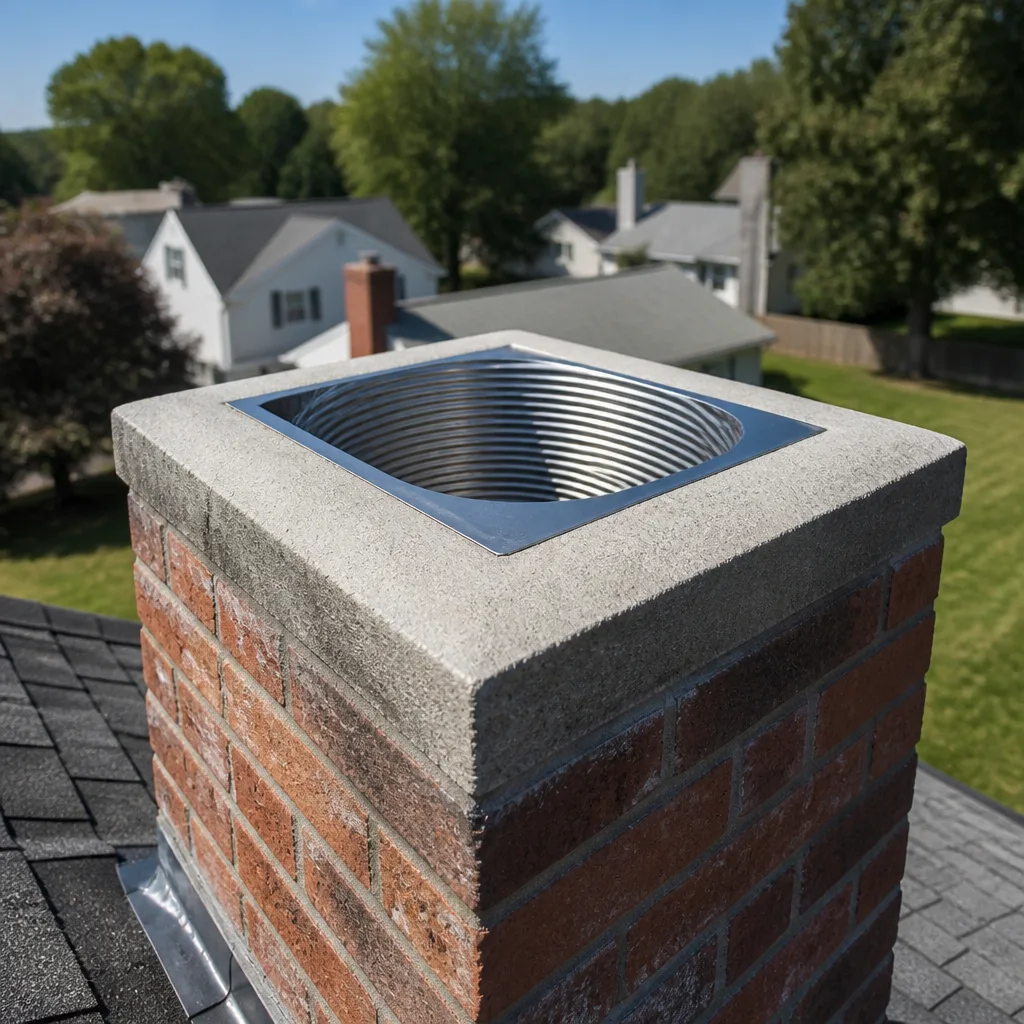
The flue liner is the surface your smoke and gases actually travel against on the way out. If the liner is sound, the hot gases stay inside the flue. If it’s cracked, missing, or unlined, hot gases and embers move into the surrounding masonry and framing. That’s the failure path that leads to a house fire. It’s also why liner condition is the single most important item on any checklist.
There are three liner types in Murray homes:
- Clay tile, standard in older masonry chimneys. Look at the tile joints with a flashlight at each level you can see. Any cracked, spalling, or shifted tile means the liner is compromised.
- Metal liners, often installed in the last two decades or with a gas appliance. These need a professional to check for corrosion, seam separation, or crushed sections.
- Unlined chimneys. If your home was built before liners were common, or the liner was removed, the chimney needs relining before safe use.
Liner condition is genuinely a professional call, but you can spot-check. From the firebox, shine a flashlight up the flue. Any visible crack or gap in the tile at the level you can see is a “don’t use this fireplace until someone inspects” flag. You’ll need the professional to read the rest.
This is also where our brand depth matters. When a liner is failing, the repair options range from resurfacing with HeatShield, which rebuilds the liner from the inside without a full removal, to a full liner installation using DuraFlex flexible liner systems. Flexible liners are appropriate for complex flue configurations (offset flues, angles, or older chimneys with irregular interior geometry) where a rigid liner won’t pass. We work with HeatShield liner resurfacing as a repair method; most sweep-only companies cannot offer it. Ask about it before you accept a full reline as the only option.
Crown, Cap, and Flashing: Protecting From the Top Down
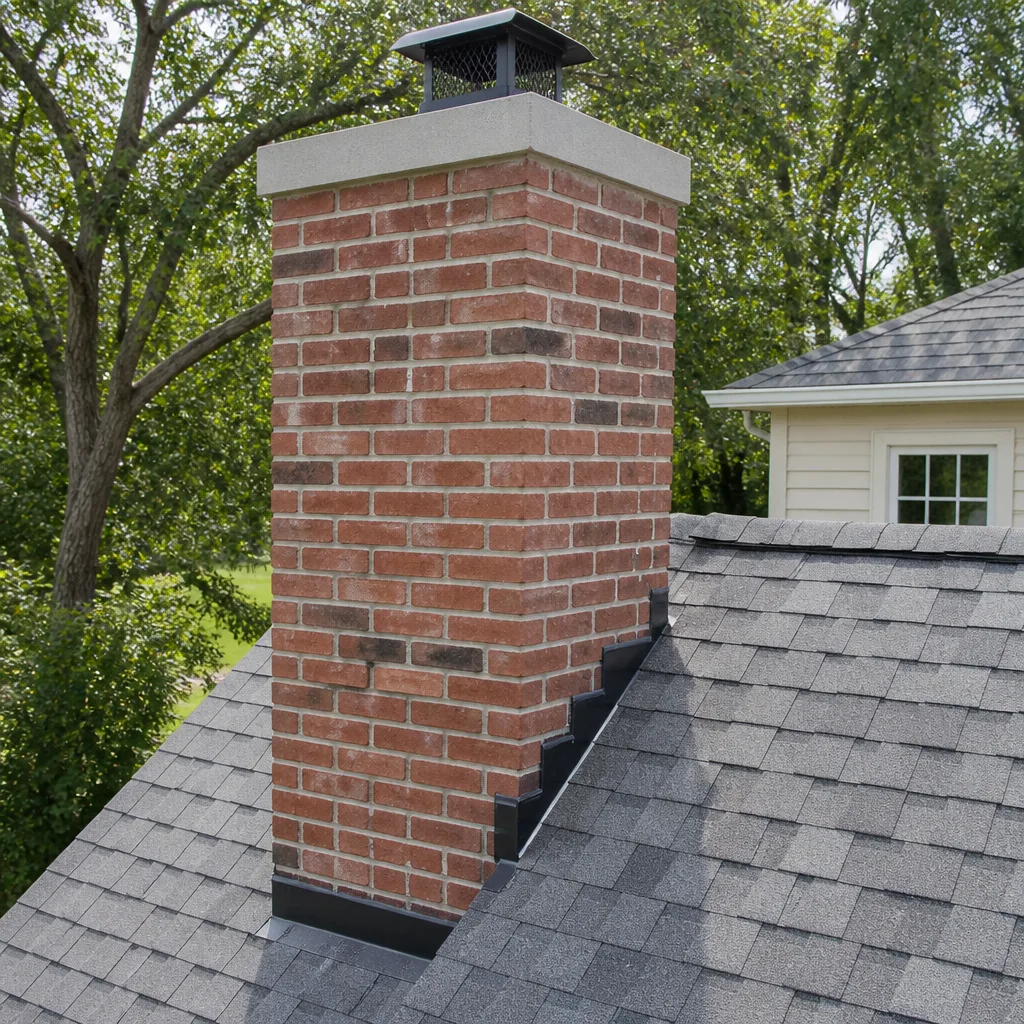
The top of the chimney is where most water damage begins. The crown, the cap, and the flashing at the roofline are all designed to shed water and keep the flue interior dry. When any of them fails, water enters the system, and the freeze-thaw cycles that Murray sees every winter accelerate the damage.
Crown inspection
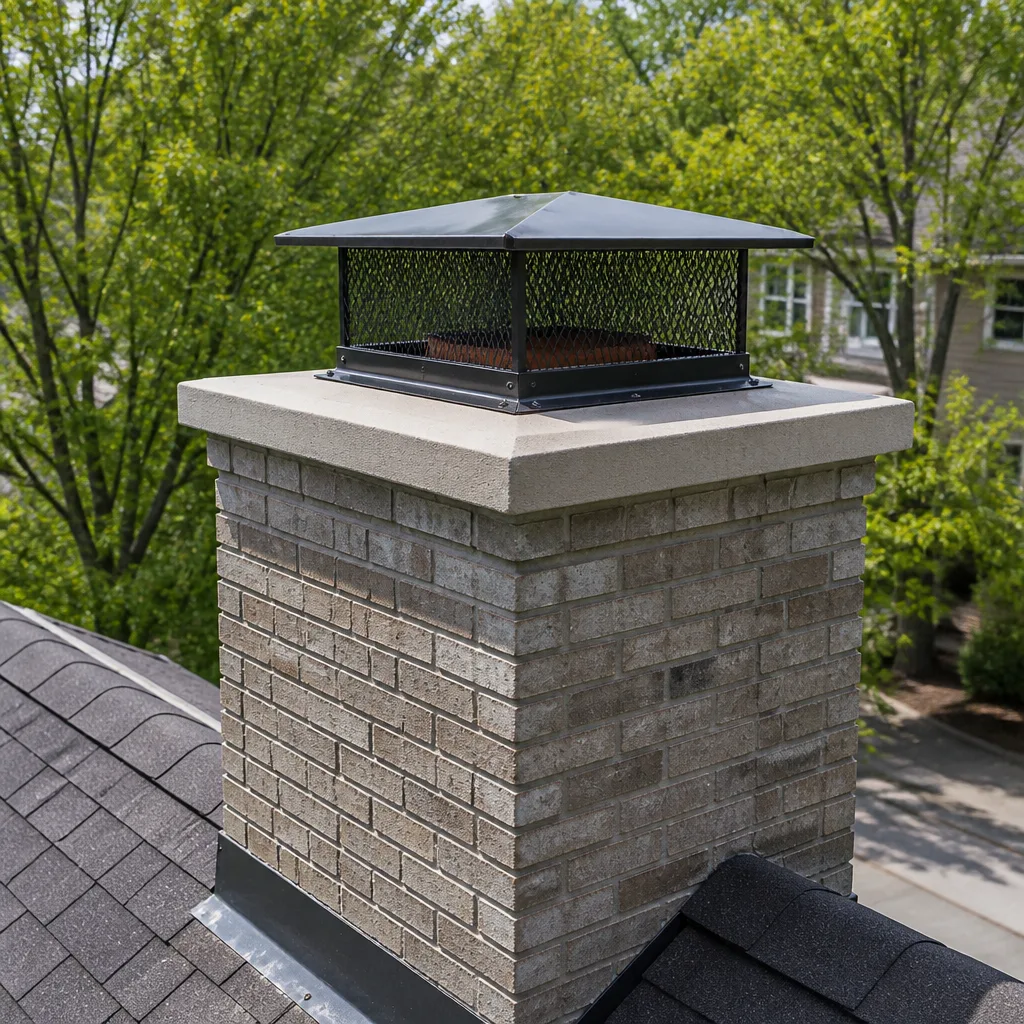
The crown is the concrete or masonry slab at the very top of the chimney that slopes away from the flue. From a safe spot on the ground with binoculars, or ideally from a professional’s view, look for hairline cracks, separation from the flue pipe, or a crown that has flattened so it no longer drains. A small crack can be sealed. A crown that has lost its slope or split all the way through needs reconstruction. Crown work is genuinely not a “climb up there and see” task for a homeowner: falls are the leading hazard here, and the work itself is masonry, not tightening a bolt.
Chimney cap inspection
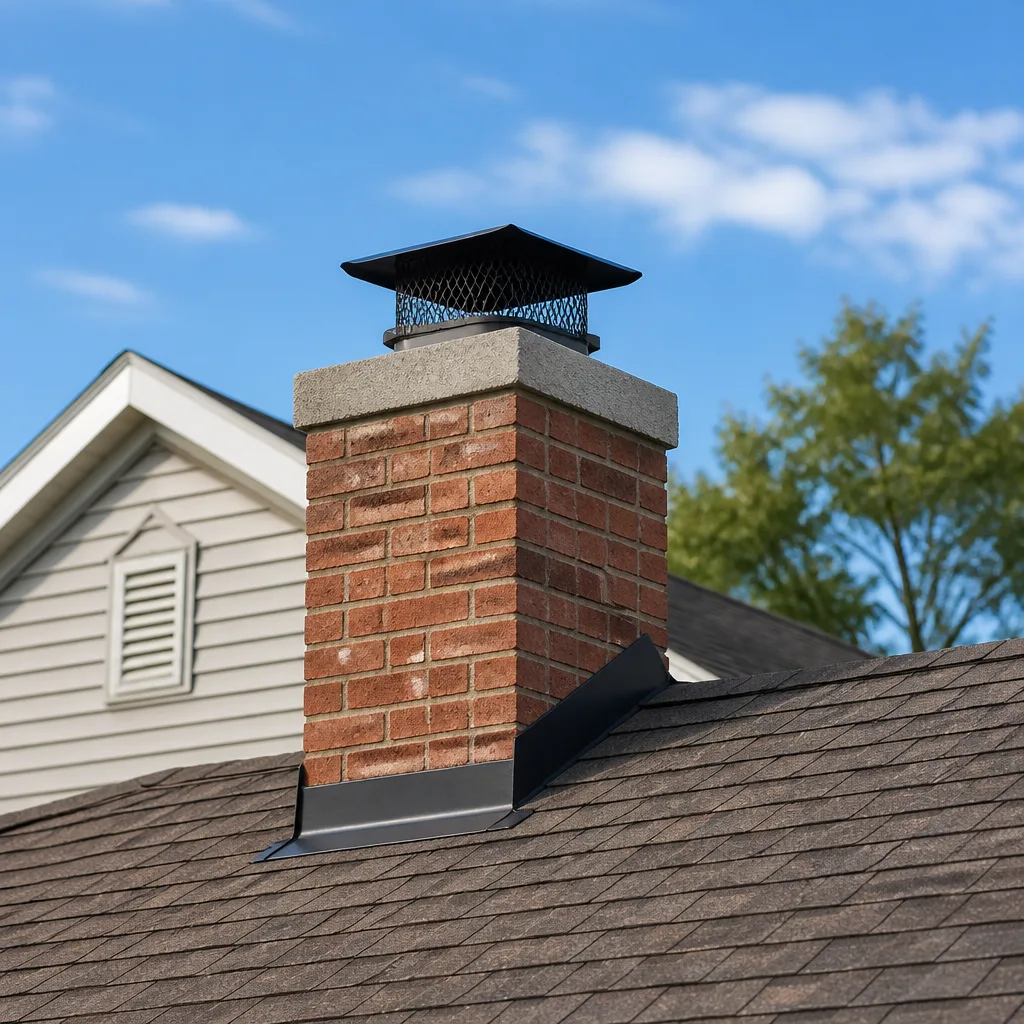
The cap is the hood and mesh at the top of the flue. Check that the mesh is intact, that the cap is still seated on the crown, and that no animal has worked its way under it. A damaged cap lets rain in directly and lets birds or squirrels nest inside the flue, which blocks the passage and creates a fire hazard. We install caps using Gelco and Famco materials, which hold up far better to Utah’s sun and freeze-thaw than hardware-store substitutes. If your cap is a thin metal spark arrestor from twenty years ago, replacement is worth considering.
Flashing inspection
Flashing is the metal that seals the joint where the chimney meets the roof. Check it where you can see it from a safe vantage. Look for rust, lifting edges, or missing sealant. Hairline gaps in flashing are the most common cause of interior water stains on ceilings near the chimney.
Seasonal Timing: Fall, Mid-Season, and Post-Season Checks
Every checklist item above needs to be looked at, but not all at once. Here’s how we time them for Murray homeowners.
Before the first fall fire
- Book a professional sweep and inspection. The smoke chamber, flue liner, and crown all require a professional visit. Schedule it before the first fire, which in Murray on a typical year means sometime in the fall.
- Self-check the firebox, damper, and cap. These are the four items you can handle from ground level or from inside the firebox.
- Walk the exterior. Visible flashing and crown from a safe vantage. Note anything questionable for the sweep to look at when they arrive.
Mid-season
- Re-check the damper for binding after a few months of use.
- Look at the cap from the ground after any significant storm, since wind and ice can dislodge a loose cap.
- Watch for smoke roll-back into the room, which often means ash build-up has changed the airflow.
After the last fire of the season
- Schedule a post-season inspection if your home burned heavily. A flue that saw a lot of creosote all winter is a flue that needs to be read before the fall.
- Walk the exterior one more time. Winter is when freeze-thaw damage shows. Spring is when you catch it.
- Compare your photo documentation (see the next section) against last year’s.
There’s an inversion-season consideration specific to Murray. During winter inversions, wood smoke adds to valley air quality problems, and some Murray residents consciously reduce their burn days. That makes the mid-season check less urgent but the pre-season one more so, because a chimney that sat unused for long stretches still accumulates creosote from the fires it did have.
How to Document Condition With Photos for Year-Over-Year Comparison
Photos are the single most useful thing you can bring to a conversation with your sweep. They replace memory, they show change, and they protect you from being sold work you don’t actually need. The trick is consistency: shoot the same angles every year.
- Take baseline shots now. Ground level from four sides (front, back, two sides). Flashlight-up-the-flue from inside the firebox. Cap from a safe vantage. Crown from a safe vantage.
- Label each shot by location in a folder on your phone. “Murray house – flue from firebox 2026” is a working filename.
- Repeat on the same dates each year. Pre-season and post-season. Same angles, same vantage points.
- Compare side by side. A hairline crack that has doubled in width in one year is a repair. A hairline crack that hasn’t changed in three is something to monitor.
- Ask the professional for a camera photo of the flue and smoke chamber during the inspection. Every service call from us includes a camera inspection and photo report, so you walk away with the interior condition documented, not described to you.
Over time, this practice builds a file you’ll rely on. When your sweep recommends a new crown, you can look at the year-over-year photos and see it plainly, rather than taking a stranger’s word for it. That’s the same standard we hold ourselves to. Nothing we recommend gets sold without camera evidence you can see for yourself, and if work can safely wait a season, we’ll tell you so.
Red Flags: Stop Using the Fireplace vs. Schedule Service
Not every finding means “stop tonight.” Some findings genuinely do. Here’s how we sort them.
Stop using the fireplace until a professional inspects
- Visible cracking or separation in the flue liner at any level you can see with a flashlight.
- Damaged or missing damper that won’t stay open.
- Smoke rolling back into the room during normal use with the damper open.
- Suspected creosote fire in the past. Puffy, honeycombed creosote on the flue walls is a warning sign. So is a chimney that made a roaring sound during use.
- Carbon monoxide detector alarming when the fireplace or flue-connected appliance is running. Leave the house and call for service before you investigate.
- Cracked fireback or firebox masonry with a visible gap behind the firebrick.
- Animal nest or blockage inside the flue.
Schedule service before the next season
- Hairline cracks in the crown that haven’t changed since last year.
- Damaged cap mesh without a blockage (verify no nesting first).
- Hairline flashing gaps without interior water staining.
- Light creosote accumulation in a flue that was swept last fall.
- Cosmetic damage to the firebox face, surround, or hearth.
The core rule is simple. Anything that lets hot gas or embers past the flue, or anything that keeps smoke from leaving the room, is a stop-use flag. Anything that will degrade further over months is a schedule-service flag. If you’re unsure which category a finding falls into, describe it over the phone and a professional can tell you whether to hold off or come in. Call (855) 616-0935. We answer 24/7. Fast dispatch from 7am to 7pm, Sunday through Friday.
Common Mistakes to Avoid
- Skipping the smoke chamber every single year. Most homeowners only ever think about the flue. The smoke chamber collects more creosote than any other section, and it’s the part a sweep-only call usually misses.
- Judging condition by the firebox alone. A clean, tidy firebox tells you nothing about the liner or crown. The dangerous failures happen above the damper where you can’t see them.
- Assuming a sweep equals an inspection. They are different services. A sweep cleans. An inspection reads liner condition, smoke chamber, crown, cap, and flashing, with camera evidence.
- Waiting for the first cold snap to book. Fall schedule fills quickly in Murray, and a pre-season inspection gives you time to address a crown or liner issue before you need the fireplace.
- Photographing nothing. Without a baseline, you can’t tell what’s changing year over year, and you have no evidence to compare against a recommendation.
- Burning unseasoned wood to stretch the firewood supply. Green wood produces more creosote and more smoke. It’s a false economy over the season.
- Replacing a cap with a hardware-store spark arrestor instead of a proper cap. Standard caps built from Gelco or Famco materials will hold up for years in valley freeze-thaw. Thin metal will not.
See the difference
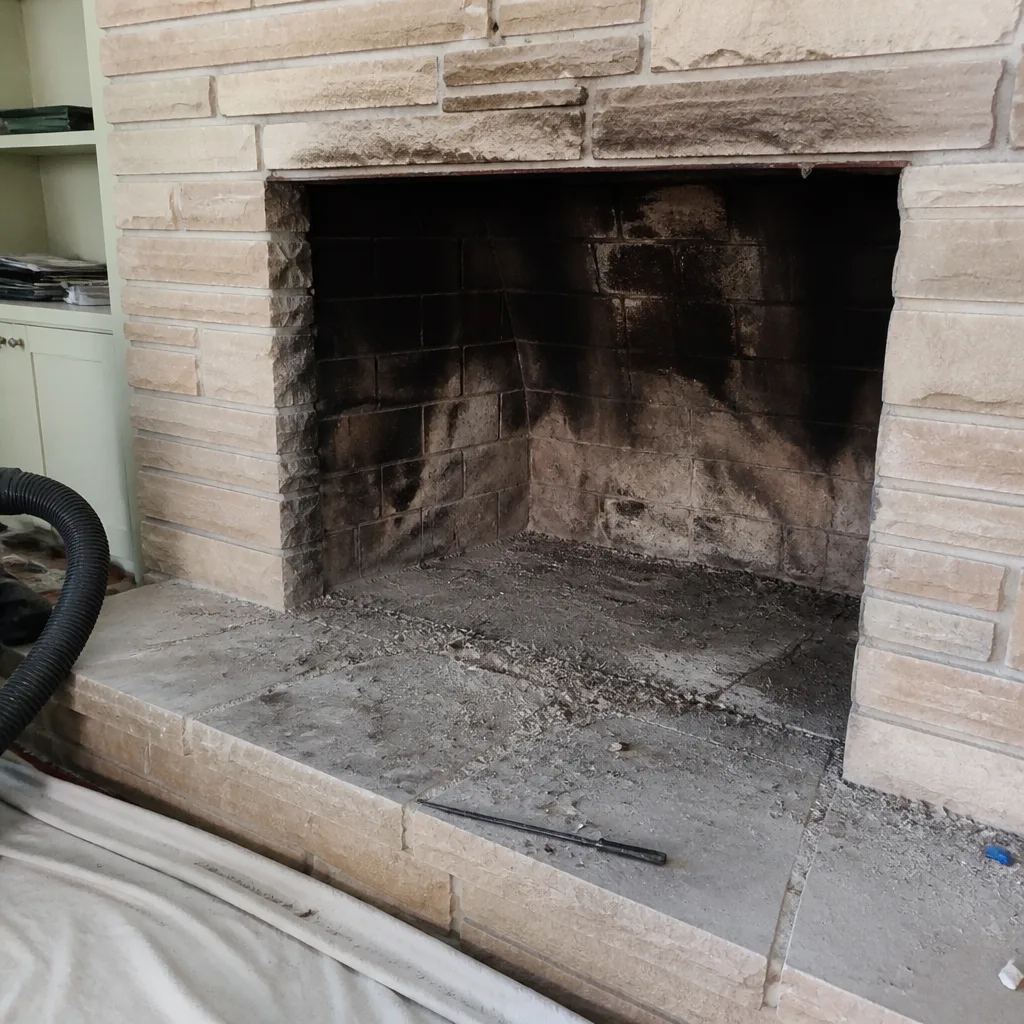 Before
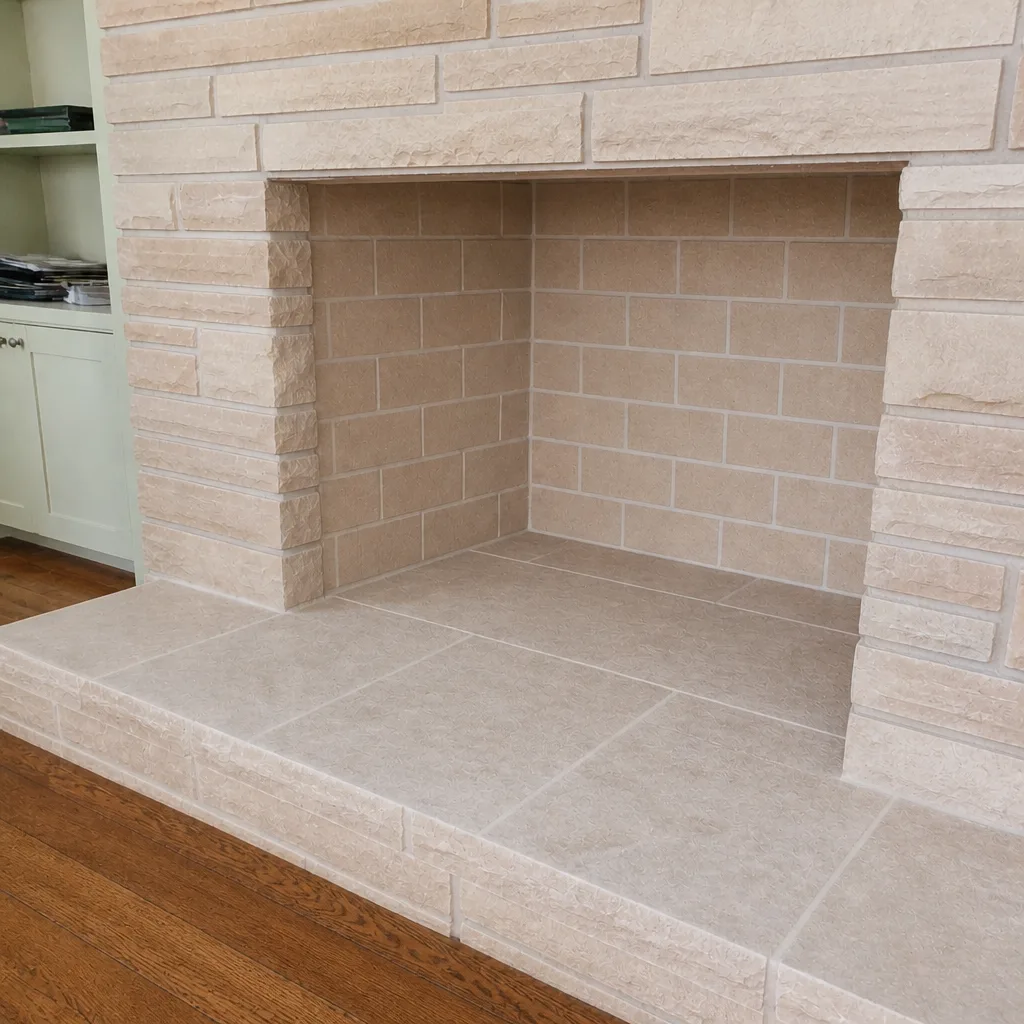 After
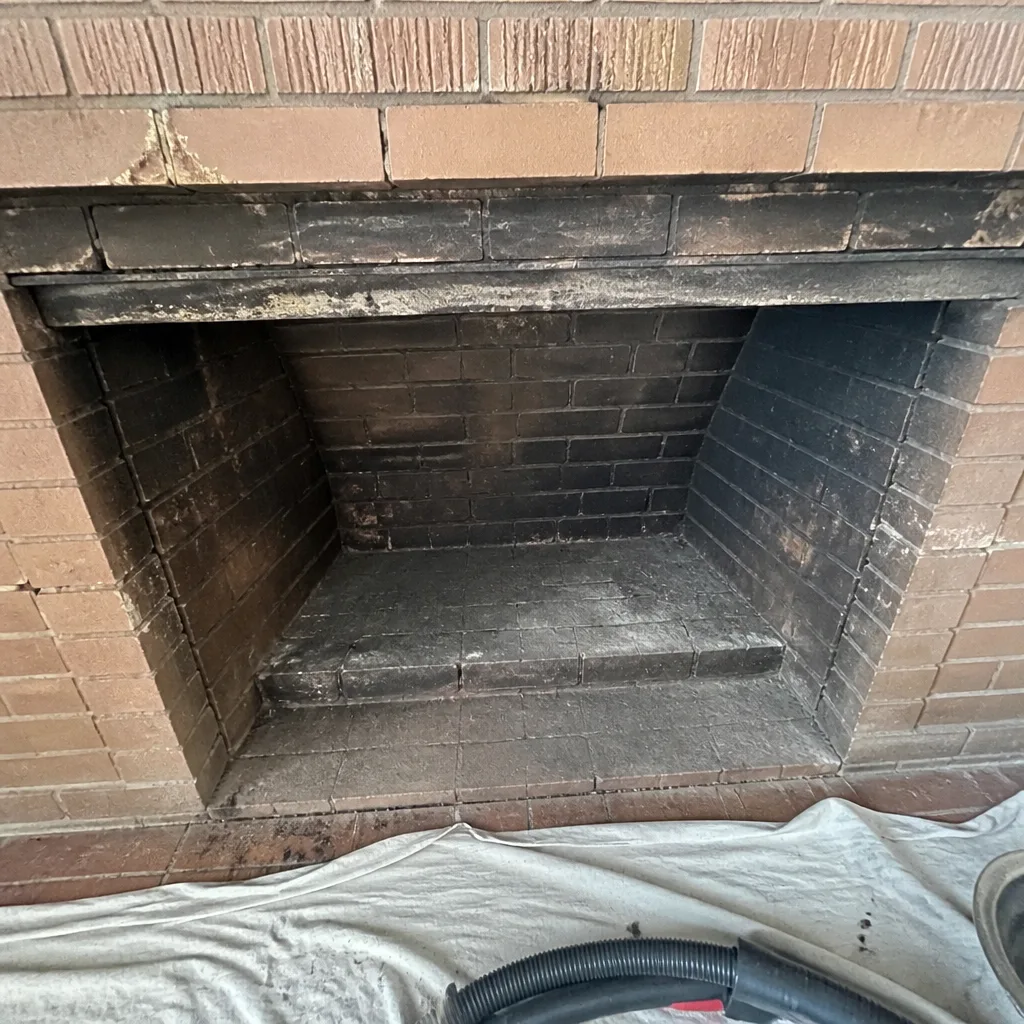 Before
 After
 Before
 After
When to Call a Professional
Call us for anything on the smoke chamber, flue liner, crown, cap replacement, or flashing list. Those items need professional equipment and, in many cases, pro-grade materials. Call us before the first fall fire even if nothing looks wrong from the ground, so the flue and smoke chamber can be read properly and you know what the winter is likely to bring. Call us immediately if you see any stop-use flag on the red flag list above. And call us if you’ve been told by another company that you need a full reline and you want a second opinion with camera evidence. Chimney Sweep Murray offers free estimates in Murray: call (855) 616-0935. The estimate is free and the price is set per job by the written estimate, so you’ll know exactly what the work will cost before you commit. Our technicians have up to 9 years of experience, and we handle the sweep, the inspection, and any repair the inspection turns up. One inspection can tell us whether you need a sweep, a liner repair, or a new crown, and we can handle all three.
Frequently Asked Questions
Annual is the standard for any chimney that sees regular winter use, and Murray’s lengthy burn season makes annual sweeps practical for most households. Homes that burn more than two cords per season, or burn green wood regularly, should consider a mid-season check in addition to the annual sweep. If you’ve never had the smoke chamber inspected, get that read at your next service.
No. The smoke chamber sits above the smoke shelf where a standard homeowner flashlight can’t read it, and you need an angled mirror and camera equipment to see the corbelled masonry at the back. Trying to reach the smoke chamber with a hand-held brush is also unwise because the geometry catches brushes in ways that risk damage. That item is in the professional’s scope on every service call.
A sweep cleans the flue and firebox. An inspection evaluates every component listed in this guide: firebox, damper, smoke shelf, smoke chamber, flue liner, crown, cap, and flashing. The two are often done together, but they’re separate services. If a company offers only the sweep, they can’t tell you the liner and crown condition. Ask for both.
Yes. The crown sheds water from the top of the chimney; the cap keeps rain, birds, and debris out of the flue itself. Both are needed and they fail independently. A cracked cap won’t stop rain from entering directly above the flue opening, and a good cap won’t protect the crown slab from freeze-thaw cracking.
Any visible crack in the flue liner, a damper that won’t stay open, smoke coming back into the room, or a carbon monoxide detector trigger means stop using the fireplace until inspected. Those are the four findings that should always trigger a call. Anything that looks stable and hasn’t changed since last year falls under “schedule service before next season.”
It rebuilds the interior of a damaged clay flue liner from the inside without demolition, using a resurfacing compound designed for that purpose. It’s appropriate when the liner is cracked or spalling but the structure around it is sound. Where the flue geometry is irregular or needs a full replacement, a DuraFlex flexible liner may be the right answer instead. The inspection tells us which one your chimney needs.
The Bottom Line
A chimney maintenance checklist works because it’s specific. The smoke chamber, the flue liner, the crown, the cap, and the flashing all fail in different ways and on different timelines, and knowing which of those to watch is the difference between a routine repair and a major rebuild. Do your self-assessable checks before the first fire, book the professional inspection every fall, and photograph everything year over year so you can see what changes. If you’re told you need work, ask for the camera photo. If you’re told it can wait, note it and check again next year. If you want a professional to walk the checklist with you, we do this work in Murray routinely: sweep, inspection, cap and crown, chimney repair, and the specialty liner work most sweep-only providers can’t offer. Call (855) 616-0935 for a free estimate. We answer 24/7. Fast dispatch from 7am to 7pm, Sunday through Friday. The written estimate sets the final price, and the local pro is licensed and insured as their state requires.
Written by the team at Chimney Sweep Murray.