
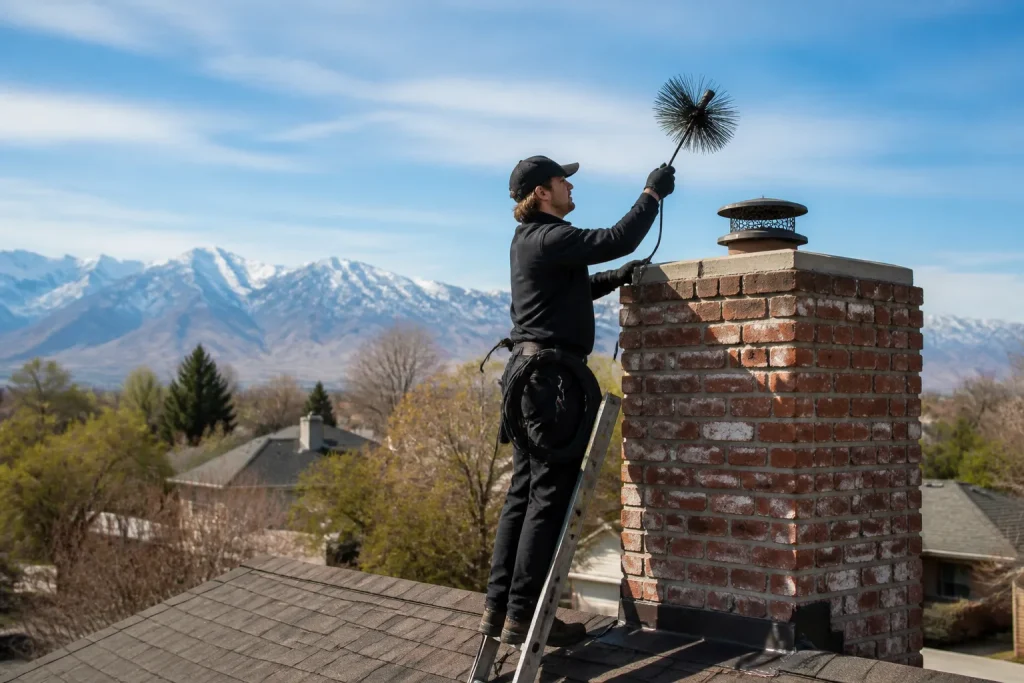
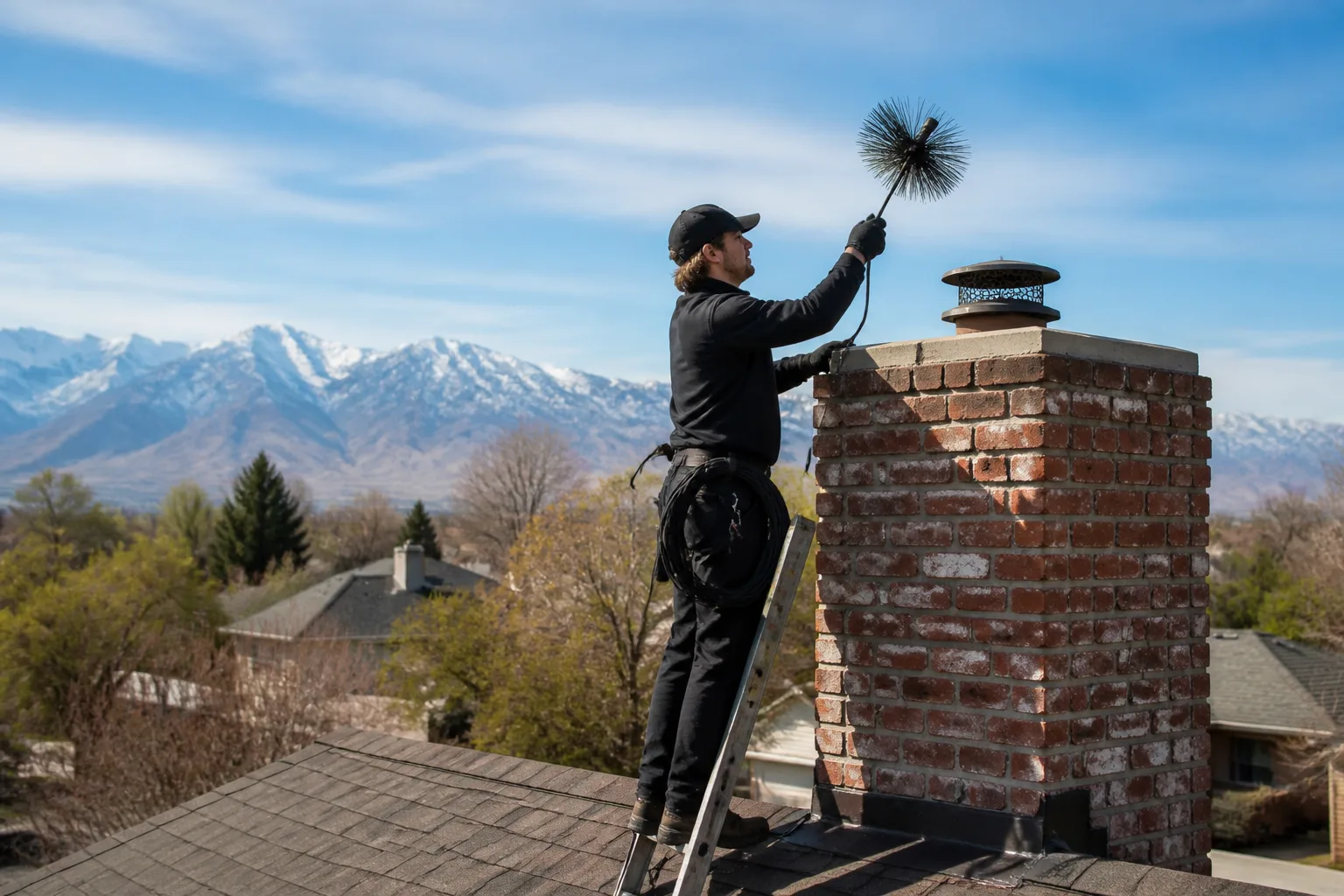
Chimney Sweep: Repair or Replace? How Murray Homeowners Decide
A cracked clay tile liner sounds catastrophic, and it’s easy to assume the whole chimney is finished. It usually isn’t. The repair-or-replace decision comes down to crack pattern, the temperature of your flue gases, and what appliance is venting through the chimney. A good technician should walk you through those variables with camera footage in hand, not a sales script. If you’d rather have a trained set of eyes on it than guess, call (855) 616-0935 to book an inspection.
What the three liner types in Murray homes mean for your decision
Most Murray homes vent through one of three liner types, and the repair-versus-replace math changes with each one.
- Clay tile: Individual tiles stacked and sealed at the joints. A single cracked tile can often be addressed if it’s isolated, but offset joints, gaps, or cracks running through multiple tiles in a line point toward replacement. Clay tolerates heat well but not the thermal shock of a sudden cool draft.
- Cast-in-place: A poured liner that hardens into a single continuous wall. Damage tends to show as spalling or a rough interior surface, and resurfacing is often a workable path if the structure behind it is sound.
- Stainless steel flexible: A full-length metal liner. If it’s intact, it’s usually the easiest to maintain. If it’s failing, replacing a damaged section is possible, though the flue geometry may not allow a partial fix.
The key point for Murray homeowners: don’t accept “you need a full reline” until someone has shown you which liner type you have, where the damage sits, and why repair won’t hold. Our technicians have up to 9 years of experience and can walk you through the camera footage as they go.
Which damage patterns mean replacement, not repair?
Some damage is repairable. A few patterns are definitive signs that replacement is the honest answer:
- Offset joints: When tiles have shifted out of alignment, flue gases escape at the seam. You can’t reseal an offset from inside without addressing the shift.
- Collapsed sections: A crushed tile compromises the flue’s integrity. Anything below or above it is now suspect, and a full-length reline is usually the only safe route.
- Spalling that exposes masonry: When the liner face breaks away and the surrounding brick is exposed to flue gases, the damage moves beyond the liner. The brick absorbs moisture and deteriorates, and a liner repair alone won’t protect the shell.
- Cracks running horizontally across the full tile face: Different from a hairline, these are structural.
The saying we’ve found holds up: clean chimneys prevent fires, sound chimneys prevent costly rebuilds. A pattern of damage in Murray that’s crept into the masonry means you’re not just fixing a liner anymore.
How to use a Level 2 inspection report as a decision tool
Most inspectors hand you a report. The useful ones hand you a decision framework. A Level 2 inspection includes video scanning of the flue, and that footage should be shared with you, not just filed.
Ask for these specific images:
- Full-length footage of the flue interior, start to finish.
- Close-ups of any crack, gap, or offset, with a reference point so you know where in the flue it sits.
- A clear shot of the crown and cap, since those affect moisture intrusion that accelerates liner damage.
Then ask these questions:
- Is the crack isolated or does it connect to others?
- What appliance is currently venting through this flue, and at what temperature range?
- If we repair this, what’s the realistic lifespan of the repair?
- What’s the cost comparison between repair and replacement, in writing?
If a company can’t answer those on the spot, that’s a signal. A chimney sweep and inspection should leave you informed, not pressured.
Liner resurfacing versus full reline: when does each make sense in Murray?
Resurfacing systems like HeatShield apply a cast-in-place lining material that fills cracks and smooths the flue interior without pulling the existing liner. Full reline installs a new stainless liner – typically DuraFlex flexible systems for complex or offset flue configurations – either inside the existing flue or as a direct replacement.
Resurfacing typically pencils out when:
- The liner is cast-in-place and the damage is surface-level spalling or roughness.
- The structural shape of the flue is intact and joints haven’t shifted.
- The appliance you’re venting doesn’t require a tighter diameter than the existing flue allows.
Full reline is usually the right call when:
- The liner is collapsed or has offset joints.
- Masonry is exposed to flue gases.
- You’re adding a high-efficiency insert with specific venting requirements.
Ask us about HeatShield resurfacing – it’s a liner repair option most companies don’t offer, and it can save significant cost when the conditions support it. We work with the same brands professionals across the industry rely on, including HeatShield, DuraFlex, and Olympia Chimney.
What role does your heating appliance play?
Here’s a factor that gets overlooked: your appliance can make the decision for you. If you’re installing a new high-efficiency wood insert or a gas appliance, the manufacturer’s venting spec may require a specific flue diameter and liner type. If the existing flue can’t meet that spec – even if it’s in decent condition – partial repair doesn’t work. The flue has to meet the new appliance’s requirements regardless of existing condition.
That’s why the assessment isn’t just about what’s damaged. It’s about what’s changing. A Murray homeowner planning to replace an old fireplace with a modern insert should factor the venting requirement into the repair-or-replace decision from the start, not after the liner work is done.
One inspection can tell us whether you need a sweep, a liner repair, or a new crown, and we can handle all three. Our approach covers the whole system, not just the flue.
When to call a pro
Chimney liners, masonry cavities, and flue gas venting are not DIY territory. Climbing onto a roof to inspect a liner, or working inside a flue without the right camera and tools, risks injury and misses the damage you’re trying to find. If you suspect a liner problem, a cap issue, or your fireplace isn’t drawing properly, that’s the moment to call.
Related services in Murray: chimney repair for structural fixes and fireplace repair for the firebox and damper. For ongoing maintenance, a chimney sweep should include an inspection so the same visit answers both the sweep and the repair-or-replace question.
The Bottom Line
Repair versus replace isn’t a gut call. It’s a framework: identify the liner type, read the damage pattern, watch the camera footage, compare repair and replacement costs in writing, and factor in any appliance changes on the horizon. In Murray, the honest answer is often repair, sometimes replacement, and occasionally “this can safely wait until next season.” Nothing should be recommended without camera evidence you can see for yourself.
If you’re in Murray and need help deciding, Chimney Sweep Murray offers free estimates and sends technicians with up to 9 years of experience who can diagnose the full system and handle the repair without handing you off to another contractor. Call (855) 616-0935. We answer 24/7. Fast dispatch from 7am to 7pm, Sunday through Friday.
Frequently Asked Questions
A standard chimney sweep in Murray is typically priced per job by written estimate, and the estimate is free. We don’t quote a one-size price because flue condition, liner type, and appliance all affect the work. Call (855) 616-0935 for an exact quote.
It depends on the damage pattern. Isolated cracks may be repairable; offset joints, collapsed sections, or spalling that exposes masonry usually mean replacement is the honest answer. Ask to see the camera footage before you decide. Call (855) 616-0935 and we’ll show you what we find.
Most wood-burning chimneys should be swept and inspected annually, or sooner if you burn heavily. Gas appliances have different servicing needs but still benefit from periodic inspection. Sweeping and inspecting together is the practical way to stay ahead of liner damage.
Creosote builds up and can ignite, which is the fire risk every chimney sweep exists to prevent. On the structural side, small cracks widen and moisture gets in, and what could have been a liner resurfacing can turn into a full reline or masonry work. Call (855) 616-0935 to book an inspection before that happens.
Written by the team at Chimney Sweep Murray.
Need Chimney Cleaning Help?
Call Chimney Sweep Murray - the local pro we connect you with is licensed and insured, here with fast help in Murray.
(855) 616-0935